

News
Laboratory Automation and Robotics: Throughput, Consistency and Traceability

Introduction
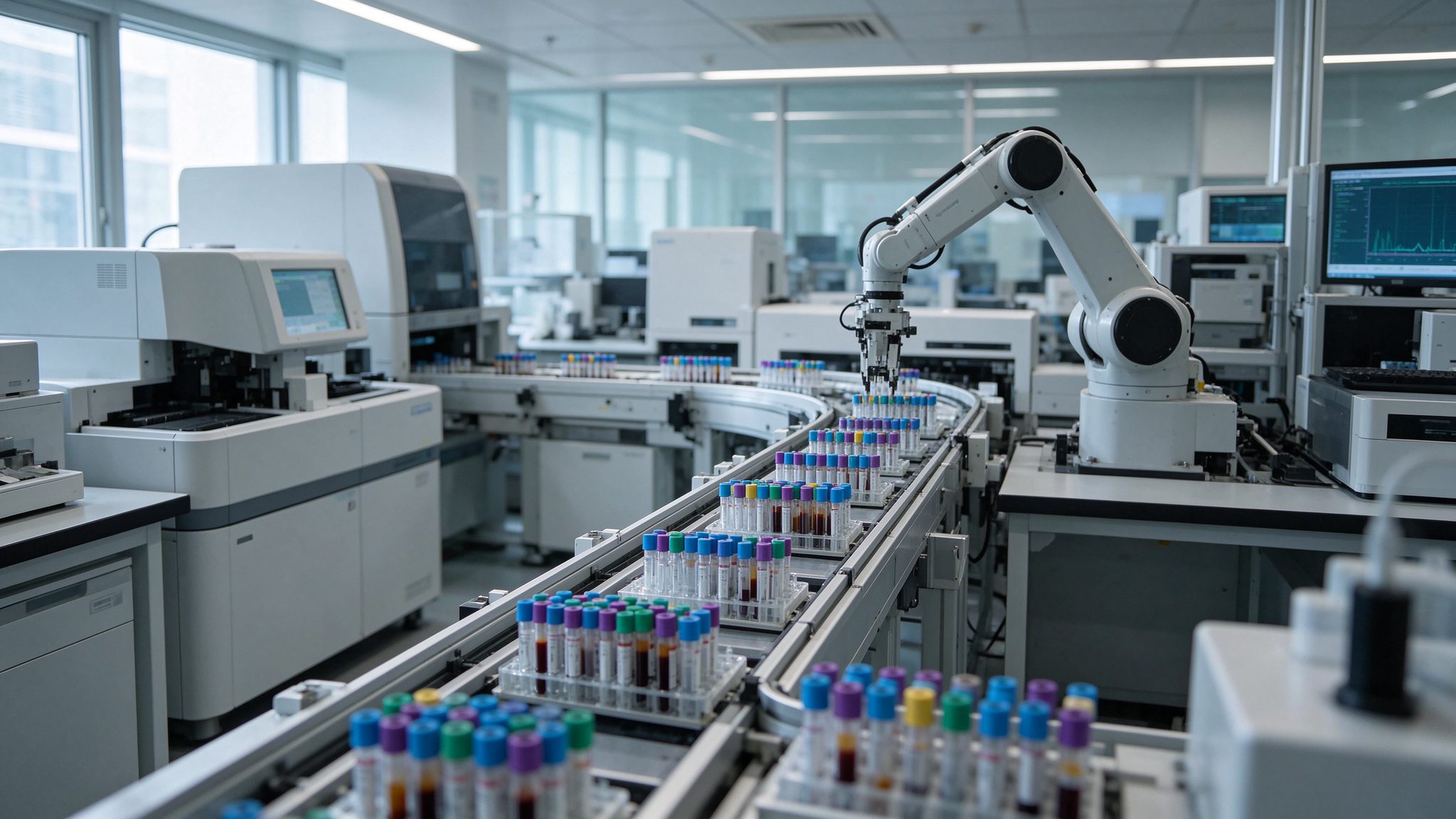
Laboratory automation covers a range of technologies—specimen track systems, robotic workcells, automated pre-analytical processing, barcode handling and middleware that routes samples to analyzers. For high-volume laboratories, the appeal is straightforward: reduce repetitive manual handling, shorten turnaround times, improve consistency and keep a clear record of where every sample has been. Automation, however, is a workflow investment rather than a single device, and its success depends on layout, integration, training and ongoing maintenance.
Where Automation Adds the Most Value
Laboratories typically prioritize tasks that are repetitive, high-volume, prone to human variation or physically demanding.
- Pre-analytical processing: Sorting, centrifugation, decapping, aliquoting and labeling are common targets because they are volume-heavy and influence sample quality before testing begins.
- Analytical integration: Samples are routed automatically to appropriate analyzers, with results sent back through the middleware and laboratory information system.
- Post-analytical handling: Archiving, retrieval and disposal workflows can be automated to reduce manual searching and misplacement.
- Quality and traceability: Barcode tracking logs each stage of a sample’s journey, supporting audit trails and faster troubleshooting when results are questioned.
Benefits for Throughput and Repeatability
Automated systems can process steady volumes without the fatigue-related variation that repetitive manual tasks introduce. Standardized pipetting, consistent centrifugation parameters and reliable routing help reduce processing errors tied to technique. For staff, automation often shifts the role from manual specimen handling toward monitoring, maintenance, exception handling and analytical review—work that makes fuller use of laboratory expertise. Documentation becomes easier when system logs capture timestamps, instrument identity and sample movement automatically.
Implementation Requirements
Introducing automation requires more than purchasing hardware. Laboratories assess current workflow, volume patterns, space constraints and future growth before designing a layout. Integration with existing analyzers, the information system and sample containers matters; incompatible interfaces can undermine expected benefits. Implementation projects also need realistic change management: staff retraining, standard operating procedure updates, downtime planning and a phased validation period in which manual and automated processes are compared.
Where Human Expertise Remains Essential
Automation handles routine movement and processing, but laboratory scientists still oversee specimen acceptability, unusual sample conditions, assay validation, quality-control review and abnormal result interpretation. Robotic systems cannot recognize every pre-analytical problem—clotted samples, insufficient volume, mislabeling or container issues—and exception workflows must route such cases to trained staff. Maintenance, calibration, troubleshooting and vendor coordination likewise rely on people who understand both the instruments and the analytical goals.
Quality Control and Continuous Improvement
Once automated, quality attention shifts to monitoring the system itself: tracking downtime, error rates, rejected samples, repeat test frequency and turnaround-time distribution. Regular preventive maintenance, software updates and review of exception reports help keep performance stable. Because automation can repeat a systematic flaw at scale, instrument validation and periodic re-evaluation remain important after the go-live phase.
Challenges to Plan For
Capital and maintenance costs, space requirements and integration complexity are common barriers. Some automation configurations are difficult to reconfigure if volume or test menus change. Laboratories also need cybersecurity considerations for connected instruments and a plan for manual fallback if the automated track or middleware fails. Balancing peak volume, seasonal fluctuations and low-priority tasks prevents over-sizing the system around one scenario.
What to Watch
Trends include more modular workcells that can be expanded in stages, better sensor-based sample quality checks, and middleware that uses operational data to predict bottlenecks. Interoperability standards and remote diagnostics are expected to simplify multi-vendor environments, while sustainability considerations—consumable use and energy consumption—gain attention in purchasing decisions.
Key Takeaways
- Automation delivers the strongest value on repetitive, high-volume, variation-prone steps of the laboratory workflow.
- Successful deployment depends on workflow design, systems integration, staff training and validation, not hardware alone.
- Laboratory professionals remain responsible for quality review, exceptions, interpretation and system oversight.
Disclaimer: This article is for general information and professional awareness only. It does not constitute medical advice, laboratory design guidance for a specific facility, or a recommendation to purchase any particular equipment. Laboratory decisions must follow applicable regulations, accreditation standards and qualified expert review.